The
ZumaMustFall movement began a while ago when the President of South Africa,
Jacob Zuma was found guilty for a number of corruption scandals. It all started when South African citizens were enough of the president getting off with fraud and corruption. South Africans, having had enough, started a movement requesting the removal of Jacob Zuma from the presidential position.
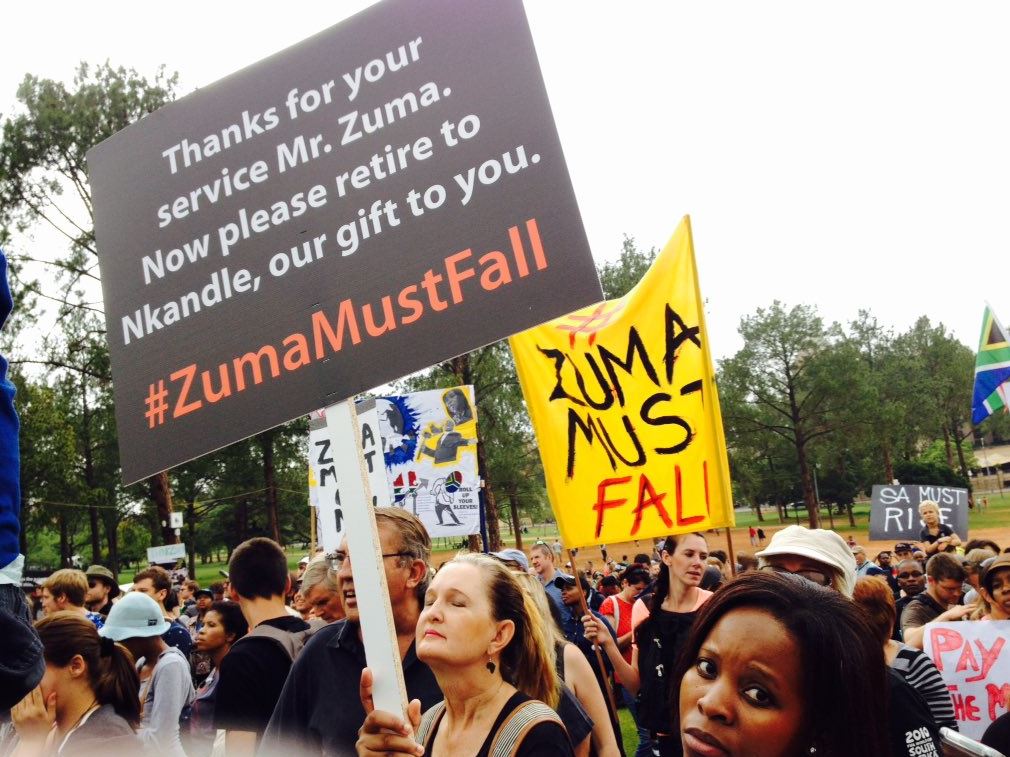
Social medial has managed to make a local issue to be of international importance, through the use of hashtags. Social media, being very influential, managed to convince people of how bad a leader Zuma is.
The Nkandla scandal was just a part of it. It has been proclaimed that the president was using taxpayers’ money for personal satisfaction, money that could have been used for beneficial purposes like educating unprivileged students rather than buying a private jet. In the past year and recently, through multiple incidents, the president has managed to convince the country of how corrupt he can be. These scandals lead to the great publicity of the issue. The scandals are also seen as the cause of all our problems, issues like the increment of university fees and the depreciation of our economy. With the scandals proven to have happened, it made it difficult for Public Relations practitioners to manage the situation and to respond as positive as possible. With the amount of negative publicity for the president, this has made our nation lose its credibility.
Social medial has managed to make a local issue to be of international importance, through the use of hashtags. Social media, being very influential, managed to convince people of how bad a leader Zuma is.
The Nkandla scandal was just a part of it. It has been proclaimed that the president was using taxpayers’ money for personal satisfaction, money that could have been used for beneficial purposes like educating unprivileged students rather than buying a private jet. In the past year and recently, through multiple incidents, the president has managed to convince the country of how corrupt he can be. These scandals lead to the great publicity of the issue. The scandals are also seen as the cause of all our problems, issues like the increment of university fees and the depreciation of our economy. With the scandals proven to have happened, it made it difficult for Public Relations practitioners to manage the situation and to respond as positive as possible. With the amount of negative publicity for the president, this has made our nation lose its credibility.
From
the amount of damage done by the scandals and the attention it received,
rectifying such for a practitioner can be very challenging. Strategically, as a
practitioner, hashtags should have been used to control the situation. One can
introduce a movement where they strategically implement positive initiatives to
rebuild the brand of our president Jacob Zuma. A movement like #LetMeExplain
for instance. People may consider Mr President as being unworthy of the
leadership position and that he should be removed with immediate effect, responding
positively and proving the necessary information as a PR practitioner could
make it possible for people to be considerate of all factors.

Your
input is of great value


